
Project Shirlington
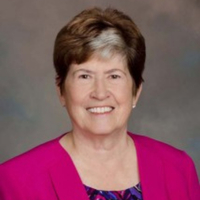
Mary Margaret Whipple
Mary Margaret Whipple was appointed to the Arlington School Board in 1976 and served as chair in 1978–79. Whipple was elected to the Arlington County Board in 1983–95 and was chair in 1986 and 1994. While on the County Board, she served as the Arlington representative to the Washington Metropolitan Area Transit Authority ("Metro") Board in 1985 and in 1988–1995, serving as chair in 1990.
This oral history focused on Mary Margaret Whipple's remembrances about Arlington's development, particularly around the Shirlington area and the development of Metro. Whipple discussed the Long Range County Improvement Program (LRCIP) and its impact on mixed-use zoning and Metro development, emphasizing the transformation of Arlington through economic development and community planning. She highlighted the importance of undergrounding Metro lines in Arlington and the role of mixed-use zoning in creating vibrant, walkable communities.
Whipple also shared insights into the success of Shirlington as a model for mixed-use development, including the significance of a central shopping area and residential integration. The conversation concluded with a discussion of key players in Arlington's development, including county board members like Joe Fisher and Ellen Bozman, and the overall success of Arlington's smart planning and growth strategies.
This oral history focused on Mary Margaret Whipple's remembrances about Arlington's development, particularly around the Shirlington area and the development of Metro. Whipple discussed the Long Range County Improvement Program (LRCIP) and its impact on mixed-use zoning and Metro development, emphasizing the transformation of Arlington through economic development and community planning. She highlighted the importance of undergrounding Metro lines in Arlington and the role of mixed-use zoning in creating vibrant, walkable communities.
Whipple also shared insights into the success of Shirlington as a model for mixed-use development, including the significance of a central shopping area and residential integration. The conversation concluded with a discussion of key players in Arlington's development, including county board members like Joe Fisher and Ellen Bozman, and the overall success of Arlington's smart planning and growth strategies.
Transcript
[00:00:04] Marty Suydam
Today's date is January 16th, 2026. The title of this oral history is Mary Margaret Whipple about her time in Arlington, with a focus on Village of Shirlington and relevant changes in Arlington. I am Marty Suydam, co-chair of the Arlington Historical Society Historic Research and Preservation Committee. I will act as the moderator for this discussion.
How did the Arlington Long Range County Improvement Program Committee LR CIPC impact the redevelopment and mixed-use zoning and routes of Metro through Arlington? For example, The Columbia Pike versus Wilson Boulevard.
[00:01:00] Mary Margaret Whipple
Okay, so the Long Range County Improvement Program, which was affectionately referred to as LRSIP, was a major county effort to actually change the direction of development in Arlington County. The county board had this proposal, I guess, to lay out in front of the community. And they went around and did various citizen meetings, town hall kind of meetings, and got lots of comments, to the extent that my memory is that they had about 75 meetings around Arlington to discuss this plan. And the essential question that was being placed before the Arlington community was: Can we and should we use the development of Metro to be a catalyst, the coming of our Metro to Arlington, be a catalyst for economic development? And how should we handle that development in the community? They pointed out to the community at large that we were a place that liked to have good schools and good services, parks, good police and fire service, so on and so forth. But that all of that meant that it was only going to get more expensive and taxes would be going up and that a way to mitigate the increase in taxes would be to have commercial development and use Metro as the area where that development, primarily, at least the most-dense development, would take place. So what it meant was that you would have high-rise office buildings and residential units around Metro stations that you would taper down to lower rise in townhouse development as it went closer to the neighborhoods. All of it to be in essentially a bullseye development around the metro stations with the most-dense development within 1/4 of a mile of the metro stations. And the promise to the community was that most neighborhoods would be untouched by this development, that it would be restricted in area and location. And that in return, Arlington County was going to get a lot of tax revenue that was going to help pay for the services and the kind of community that Arlingtonians wanted to have. And after 75 meetings and much debate and discussion and answering of questions, it was decided to proceed with that kind of plan. And that you would therefore, in the future, around the Metro stations, have mixed-use development. That type of mixed-use development was originated in Arlington around Shirlington where a plan was made to have a lively neighborhood that would have offices and residences and retail, including restaurants and entertainment and shopping and the kinds of things that meant that people in large part might be able to do their shopping and many of their activities right there in the neighborhood in which they lived. They might even work in the neighborhood in which they lived. So the plan was made to proceed with mixed-use development around metro stations or around transportation hubs in Arlington. And it transformed the community.
That's great insight. One thing I just noticed is that I didn't give you an introduction about your background. I'll do that right now and we'll just splice that in at the front. Mary Margaret Whipple was raised in College Station, Texas and attended Rice University. She holds a BA in English from American University and an MA in American Studies from George Washington University. She was appointed to the Arlington School Board in 1976 and served as chair 1978 to 79. Whipple was elected to the Arlington County Board in 1983 through 95 and was chair in 1986. While on the county board, she served as the Arlington representative to the Washington Metropolitan Area Transit Authority, Metro Board in 1985 and in 1988 through 1995, serving as chair in 1990. All of what you just said before is now substantiated by this great biographical sketch. So we'll then proceed to the next one because this was your first question was all about planning.
[00:05:14] Marty Suydam
Now it's, tell me about how Metro came to Arlington.
[00:06:25] Marty Suydam
Yeah, so there were a lot of decisions made by the Metro Board in the planning of Metro, and it was a very complicated situation because there are three states involved, Maryland, the District of Columbia, and Virginia. And so it had to be fair. Somehow you had to make sure that each part of the region got its due share of metro rail service. And it had to begin in the district because that's the center of the system. It's a lot of debate about where the lines would go and when. And I can remember the much later, Maryland being very upset that the Green Line hadn't been built yet, and it was, there was a lot of debate about all that. At any rate, when the plan for Metro to come to Virginia was the Orange Line, and it was envisioned to run out the median strip of I-66 as that was already publicly owned land on which the rails could go and would not disturb neighborhoods and the construction would be relatively cheaper and quicker to accomplish by going above ground in the median of I-66. But Arlington thought about it, considered the impact on the community, and felt that it would be, in the long run, better for Arlington to have the metro stations run underground or partially underground. And in the end, the decision was made to run the lines underground from Rosslyn to Ballston, a partially underground going to the Pentagon and National Airport and coming above ground in Ballston and going on out to Fairfax above ground. That was the Wilson Boulevard from Rosslyn to Ballston was the old commercial corridor for Arlington County. There was a lot of small businesses, low-rise development along there, primarily a couple stories, maybe 3 and a lot of small businesses. So you can imagine that there was a lot of disruption with the construction of Metro. And that was a consideration in making this decision. It was known that businesses were going to have problems and customers were going to have problems getting to those businesses during the construction period. So it was a big decision to make to have that much disruption. But the feeling was that in the long run, that was going to be of great benefit to Arlington in terms of building its tax base and having a more reasonable division between residential and commercial development in the community. So, and I've been told that one of the ways they were able to finance the increased cost of undergrounding Metro was that Georgetown decided not to have a Metro stop in Georgetown. And so there was some funding available to make possible the increased cost of the undergrounding of Metro in Arlington.
Well, that's really interesting. Next question is, how did the mixed-use zoning ordinance impact the Metro stops and Metro development?
[00:06:29] Mary Margaret Whipple
So the mixed-use development in the end worked out pretty well, but it had some hiccups along the way. Rosslyn had a lot of development before Metro came, and it was primarily commercial development there, high-rise commercial development. And what we learned from that was that Rosslyn was a fairly lively place from 8 to 5 and just dead at night. No activity, no pedestrian activity. Few restaurants were patronized in the evenings. It was not as satisfactory as had been hoped. So that lesson was taken to other parts of the county, Shirlington being a good example of that, if you mix residential with commercial, you get a more balanced development and a livelier community. I think this was most taken to heart in the Ballston area, around the Ballston metro station where the sector plan called for 50% residential, 50% commercial. And the way this was accomplished was that a developer could get 3.0 FAR, floor area ratio, in that area. But in addition, they would just be given, so to speak, 3.0 FAR of residential with no additional cost, the developer could do both commercial and residential development. And in fact, if they did, that was a total of 6.0 FAR. If they in fact did all residential, they could get 6.5 FAR. So the whole point of the zoning ordinance was to really encourage of that residential development. And essentially what it meant was there was no land cost for the residential development. And it was very successful. I think there was, as far as I can remember, there's only one all-residential project. That was Randolph Towers. And that took the benefit of the 6.5 FAR. But most of the development in Ballston was 50-50 residential and commercial. There was already the Parkington Shopping Center there, which was later redeveloped into the Ballston Mall and is now called Ballston Quarter. So there was quite a bit of shopping already there. And, you know, so then naturally the development spurred quite a bit of retail development in the area, in addition to what was at the mall. So it's a much, it's a balanced community in which you can walk to many services and shopping, restaurants, banks, drugstore, so on. It was all eminently walkable. And there's a small park in the center of Ballston next to the metro station where they have a farmer's market. And I currently live in the Ballston area and enjoying the fruits of our decisions years ago.
Yeah, you actually covered a lot of what I was going to ask in another question, but there was something that just came up in this. When you talk about this FAR, there may be people that understand what that all means, but this 3.5 and 6.0, what's the significance of that for those of us that aren't into that?
[00:10:13] Marty Suydam
Let's see. I don't know if I can give a good explanation or not. Basically, it just means how many square feet of development you're allowed to build on a land area of whatever. And in this case, it's I think it means that it's three times or six times. Okay, it's probably times. Well, that helps to understand. Yeah, I shouldn't have. No, it's okay. No, it's actually probably very, it's very important.
All right, our next question is, what is the story about Shirlington as the first mixed-use stop, smart planning model?
[00:10:25] Mary Margaret Whipple
So I think Shirlington led the way in understanding how important it was to have this mix of residential and commercial and retail, all within a very more or less confined area. And that people then would have the services nearby so that they could walk. And the other thing that I think at Shirlington has been very instrumental to its success was that it was built around the central streets with parking lots and parking garages on the periphery. So you could park, but then you walked into the center space and that's where you took part in whatever activity you were going to do if you were going to a restaurant. And one of the very big issues about Shirlington as it developed was to have a grocery store there. And I can remember a lot of work done to try to set aside space for a grocery store. And then, of course, you have to go to the private sector and convince them that this is going to be a good location that will result in lots of sales for them. But it is an important pillar for a community to have a grocery store there. Some of the amenities in Shirlington were already there was a movie theater that exists to this day, small shops that people patronized, restaurants, and the number of restaurants is just exploded almost. There's so many places to go to eat in the Shirlington area. But it had enough residential there to support those businesses. It had parking on the periphery that attracted people to come from outside, and you could work there as well. And it was also a good example of two localities being able to cooperate because a piece of Shirlington actually belongs to the city of Alexandria.
That's what a lot of people don't know. There's a little piece of it in the corner that is Alexandria. That's a good point. The other, I didn't realize about the importance of the grocery store and that Harris Teeter there. Now, when I go through there, I will have a better appreciation.
[00:14:14] Marty Suydam
Yeah, it was the first grocery store was in a different location. It was closer to 395 and was a little smaller, but it was a success. And it showed that a grocery store could prosper there. And of course, the people who lived there really appreciated having it there.
That's an important insight. Again, around the Shirlington area, what is the story about the Arlington Mill Drive development? That's the berms, parks, townhouses, and everything else as an extension of the village.
[00:14:35] Mary Margaret Whipple
Yeah, so in the course of the work that was done on Four Mile Run to help, we hope, to cure the flooding problems there was also a lot of concern about the visual aspects and park-like aspects of the community. The trail was built, a berm to hide some of the less sightly businesses from the rest of the community. And over time, the character of the businesses along of Four Mile Run did change. One of the interesting stories, I think, is that Signature Theater, which is now just a pillar of the community in the Shirlington area and has been such a successful regional theater, started out in what had been a bumper plating facility doing auto work and taking care of bumpers on Four Mile Run. And it grew from that humble beginning, first to get a place in Shirlington proper and then later to be built on top of the Arlington County Library. Again, a way to use already owned public space to provide, in essence, the land and thus reduce the construction costs so that Signature was able to raise the funds to build the new theater there.
Those are some great little anecdotes that add life to this village of Shirlington. That's really great.
[00:15:12] Marty Suydam
Who are the key players who made the Shirlington redevelopment happen from your perspective?
So I think, I think that a great deal of credit goes to the county board in the 60s and 70s that included Joe Fisher, who later became the Congressman from this district. Joe Wholey was enormously influential in envisioning the possibilities, but also going, taking, having the energy to go out and sell that to the community. He was largely responsible for the 75 community meetings that I mentioned where this issue was laid out to the public so that they could make that kind of a decision for the whole community. Ellen Bozman was on the board there. She later served 24 years on the county board. I think the longest tenure of anyone. So those are the people that I think of as being the most influential in determining, and there were others. But anyway, they were very influential in determining where the Metro rail system would go and getting the funding all arranged for that, and then beginning this whole process of sector plans around each of the metro stations.
[00:15:22] Mary Margaret Whipple
Good. Are there any other thoughts that I haven't covered with questions that you might want to add to this?
Just that I think that because there was such a good community process, because there were such good and thoughtful people on the county board and members of the community, that Arlington's always had a lot of commissions and boards that worked on things. So the long range county improvement plan commission itself, the Planning Commission, which has existed for decades, a lot of really good, thoughtful, smart people served on those boards and commissioned and helped amplify what the county board had in mind. What it resulted in was a community that's been lauded as an example of smart planning, of smart growth based on a transportation system that could support it. You can't have dense development without the transportation infrastructure. It's best to use your transportation infrastructure to be this catalyst for economic development. And I think Arlington has proven to be a wonderful example of that.
[00:17:45] Marty Suydam
Yeah, your wrap up statement is perfect. It actually forms the basis of a title for this thing as opposed to where I was starting with just the focus of Village of Shirlington. But it really is an example and that's really great.
[00:18:02] Mary Margaret Whipple
[00:18:27] Marty Suydam
[00:18:42] Mary Margaret Whipple
[00:20:34] Marty Suydam
[00:20:49] Mary Margaret Whipple
[00:22:25] Marty Suydam
[00:22:35] Mary Margaret Whipple
[00:24:00] Marty Suydam
Today's date is January 16th, 2026. The title of this oral history is Mary Margaret Whipple about her time in Arlington, with a focus on Village of Shirlington and relevant changes in Arlington. I am Marty Suydam, co-chair of the Arlington Historical Society Historic Research and Preservation Committee. I will act as the moderator for this discussion.
How did the Arlington Long Range County Improvement Program Committee LR CIPC impact the redevelopment and mixed-use zoning and routes of Metro through Arlington? For example, The Columbia Pike versus Wilson Boulevard.
[00:01:00] Mary Margaret Whipple
Okay, so the Long Range County Improvement Program, which was affectionately referred to as LRSIP, was a major county effort to actually change the direction of development in Arlington County. The county board had this proposal, I guess, to lay out in front of the community. And they went around and did various citizen meetings, town hall kind of meetings, and got lots of comments, to the extent that my memory is that they had about 75 meetings around Arlington to discuss this plan. And the essential question that was being placed before the Arlington community was: Can we and should we use the development of Metro to be a catalyst, the coming of our Metro to Arlington, be a catalyst for economic development? And how should we handle that development in the community? They pointed out to the community at large that we were a place that liked to have good schools and good services, parks, good police and fire service, so on and so forth. But that all of that meant that it was only going to get more expensive and taxes would be going up and that a way to mitigate the increase in taxes would be to have commercial development and use Metro as the area where that development, primarily, at least the most-dense development, would take place. So what it meant was that you would have high-rise office buildings and residential units around Metro stations that you would taper down to lower rise in townhouse development as it went closer to the neighborhoods. All of it to be in essentially a bullseye development around the metro stations with the most-dense development within 1/4 of a mile of the metro stations. And the promise to the community was that most neighborhoods would be untouched by this development, that it would be restricted in area and location. And that in return, Arlington County was going to get a lot of tax revenue that was going to help pay for the services and the kind of community that Arlingtonians wanted to have. And after 75 meetings and much debate and discussion and answering of questions, it was decided to proceed with that kind of plan. And that you would therefore, in the future, around the Metro stations, have mixed-use development. That type of mixed-use development was originated in Arlington around Shirlington where a plan was made to have a lively neighborhood that would have offices and residences and retail, including restaurants and entertainment and shopping and the kinds of things that meant that people in large part might be able to do their shopping and many of their activities right there in the neighborhood in which they lived. They might even work in the neighborhood in which they lived. So the plan was made to proceed with mixed-use development around metro stations or around transportation hubs in Arlington. And it transformed the community.
That's great insight. One thing I just noticed is that I didn't give you an introduction about your background. I'll do that right now and we'll just splice that in at the front. Mary Margaret Whipple was raised in College Station, Texas and attended Rice University. She holds a BA in English from American University and an MA in American Studies from George Washington University. She was appointed to the Arlington School Board in 1976 and served as chair 1978 to 79. Whipple was elected to the Arlington County Board in 1983 through 95 and was chair in 1986. While on the county board, she served as the Arlington representative to the Washington Metropolitan Area Transit Authority, Metro Board in 1985 and in 1988 through 1995, serving as chair in 1990. All of what you just said before is now substantiated by this great biographical sketch. So we'll then proceed to the next one because this was your first question was all about planning.
[00:05:14] Marty Suydam
Now it's, tell me about how Metro came to Arlington.
[00:06:25] Marty Suydam
Yeah, so there were a lot of decisions made by the Metro Board in the planning of Metro, and it was a very complicated situation because there are three states involved, Maryland, the District of Columbia, and Virginia. And so it had to be fair. Somehow you had to make sure that each part of the region got its due share of metro rail service. And it had to begin in the district because that's the center of the system. It's a lot of debate about where the lines would go and when. And I can remember the much later, Maryland being very upset that the Green Line hadn't been built yet, and it was, there was a lot of debate about all that. At any rate, when the plan for Metro to come to Virginia was the Orange Line, and it was envisioned to run out the median strip of I-66 as that was already publicly owned land on which the rails could go and would not disturb neighborhoods and the construction would be relatively cheaper and quicker to accomplish by going above ground in the median of I-66. But Arlington thought about it, considered the impact on the community, and felt that it would be, in the long run, better for Arlington to have the metro stations run underground or partially underground. And in the end, the decision was made to run the lines underground from Rosslyn to Ballston, a partially underground going to the Pentagon and National Airport and coming above ground in Ballston and going on out to Fairfax above ground. That was the Wilson Boulevard from Rosslyn to Ballston was the old commercial corridor for Arlington County. There was a lot of small businesses, low-rise development along there, primarily a couple stories, maybe 3 and a lot of small businesses. So you can imagine that there was a lot of disruption with the construction of Metro. And that was a consideration in making this decision. It was known that businesses were going to have problems and customers were going to have problems getting to those businesses during the construction period. So it was a big decision to make to have that much disruption. But the feeling was that in the long run, that was going to be of great benefit to Arlington in terms of building its tax base and having a more reasonable division between residential and commercial development in the community. So, and I've been told that one of the ways they were able to finance the increased cost of undergrounding Metro was that Georgetown decided not to have a Metro stop in Georgetown. And so there was some funding available to make possible the increased cost of the undergrounding of Metro in Arlington.
Well, that's really interesting. Next question is, how did the mixed-use zoning ordinance impact the Metro stops and Metro development?
[00:06:29] Mary Margaret Whipple
So the mixed-use development in the end worked out pretty well, but it had some hiccups along the way. Rosslyn had a lot of development before Metro came, and it was primarily commercial development there, high-rise commercial development. And what we learned from that was that Rosslyn was a fairly lively place from 8 to 5 and just dead at night. No activity, no pedestrian activity. Few restaurants were patronized in the evenings. It was not as satisfactory as had been hoped. So that lesson was taken to other parts of the county, Shirlington being a good example of that, if you mix residential with commercial, you get a more balanced development and a livelier community. I think this was most taken to heart in the Ballston area, around the Ballston metro station where the sector plan called for 50% residential, 50% commercial. And the way this was accomplished was that a developer could get 3.0 FAR, floor area ratio, in that area. But in addition, they would just be given, so to speak, 3.0 FAR of residential with no additional cost, the developer could do both commercial and residential development. And in fact, if they did, that was a total of 6.0 FAR. If they in fact did all residential, they could get 6.5 FAR. So the whole point of the zoning ordinance was to really encourage of that residential development. And essentially what it meant was there was no land cost for the residential development. And it was very successful. I think there was, as far as I can remember, there's only one all-residential project. That was Randolph Towers. And that took the benefit of the 6.5 FAR. But most of the development in Ballston was 50-50 residential and commercial. There was already the Parkington Shopping Center there, which was later redeveloped into the Ballston Mall and is now called Ballston Quarter. So there was quite a bit of shopping already there. And, you know, so then naturally the development spurred quite a bit of retail development in the area, in addition to what was at the mall. So it's a much, it's a balanced community in which you can walk to many services and shopping, restaurants, banks, drugstore, so on. It was all eminently walkable. And there's a small park in the center of Ballston next to the metro station where they have a farmer's market. And I currently live in the Ballston area and enjoying the fruits of our decisions years ago.
Yeah, you actually covered a lot of what I was going to ask in another question, but there was something that just came up in this. When you talk about this FAR, there may be people that understand what that all means, but this 3.5 and 6.0, what's the significance of that for those of us that aren't into that?
[00:10:13] Marty Suydam
Let's see. I don't know if I can give a good explanation or not. Basically, it just means how many square feet of development you're allowed to build on a land area of whatever. And in this case, it's I think it means that it's three times or six times. Okay, it's probably times. Well, that helps to understand. Yeah, I shouldn't have. No, it's okay. No, it's actually probably very, it's very important.
All right, our next question is, what is the story about Shirlington as the first mixed-use stop, smart planning model?
[00:10:25] Mary Margaret Whipple
So I think Shirlington led the way in understanding how important it was to have this mix of residential and commercial and retail, all within a very more or less confined area. And that people then would have the services nearby so that they could walk. And the other thing that I think at Shirlington has been very instrumental to its success was that it was built around the central streets with parking lots and parking garages on the periphery. So you could park, but then you walked into the center space and that's where you took part in whatever activity you were going to do if you were going to a restaurant. And one of the very big issues about Shirlington as it developed was to have a grocery store there. And I can remember a lot of work done to try to set aside space for a grocery store. And then, of course, you have to go to the private sector and convince them that this is going to be a good location that will result in lots of sales for them. But it is an important pillar for a community to have a grocery store there. Some of the amenities in Shirlington were already there was a movie theater that exists to this day, small shops that people patronized, restaurants, and the number of restaurants is just exploded almost. There's so many places to go to eat in the Shirlington area. But it had enough residential there to support those businesses. It had parking on the periphery that attracted people to come from outside, and you could work there as well. And it was also a good example of two localities being able to cooperate because a piece of Shirlington actually belongs to the city of Alexandria.
That's what a lot of people don't know. There's a little piece of it in the corner that is Alexandria. That's a good point. The other, I didn't realize about the importance of the grocery store and that Harris Teeter there. Now, when I go through there, I will have a better appreciation.
[00:14:14] Marty Suydam
Yeah, it was the first grocery store was in a different location. It was closer to 395 and was a little smaller, but it was a success. And it showed that a grocery store could prosper there. And of course, the people who lived there really appreciated having it there.
That's an important insight. Again, around the Shirlington area, what is the story about the Arlington Mill Drive development? That's the berms, parks, townhouses, and everything else as an extension of the village.
[00:14:35] Mary Margaret Whipple
Yeah, so in the course of the work that was done on Four Mile Run to help, we hope, to cure the flooding problems there was also a lot of concern about the visual aspects and park-like aspects of the community. The trail was built, a berm to hide some of the less sightly businesses from the rest of the community. And over time, the character of the businesses along of Four Mile Run did change. One of the interesting stories, I think, is that Signature Theater, which is now just a pillar of the community in the Shirlington area and has been such a successful regional theater, started out in what had been a bumper plating facility doing auto work and taking care of bumpers on Four Mile Run. And it grew from that humble beginning, first to get a place in Shirlington proper and then later to be built on top of the Arlington County Library. Again, a way to use already owned public space to provide, in essence, the land and thus reduce the construction costs so that Signature was able to raise the funds to build the new theater there.
Those are some great little anecdotes that add life to this village of Shirlington. That's really great.
[00:15:12] Marty Suydam
Who are the key players who made the Shirlington redevelopment happen from your perspective?
So I think, I think that a great deal of credit goes to the county board in the 60s and 70s that included Joe Fisher, who later became the Congressman from this district. Joe Wholey was enormously influential in envisioning the possibilities, but also going, taking, having the energy to go out and sell that to the community. He was largely responsible for the 75 community meetings that I mentioned where this issue was laid out to the public so that they could make that kind of a decision for the whole community. Ellen Bozman was on the board there. She later served 24 years on the county board. I think the longest tenure of anyone. So those are the people that I think of as being the most influential in determining, and there were others. But anyway, they were very influential in determining where the Metro rail system would go and getting the funding all arranged for that, and then beginning this whole process of sector plans around each of the metro stations.
[00:15:22] Mary Margaret Whipple
Good. Are there any other thoughts that I haven't covered with questions that you might want to add to this?
Just that I think that because there was such a good community process, because there were such good and thoughtful people on the county board and members of the community, that Arlington's always had a lot of commissions and boards that worked on things. So the long range county improvement plan commission itself, the Planning Commission, which has existed for decades, a lot of really good, thoughtful, smart people served on those boards and commissioned and helped amplify what the county board had in mind. What it resulted in was a community that's been lauded as an example of smart planning, of smart growth based on a transportation system that could support it. You can't have dense development without the transportation infrastructure. It's best to use your transportation infrastructure to be this catalyst for economic development. And I think Arlington has proven to be a wonderful example of that.
[00:17:45] Marty Suydam
Yeah, your wrap up statement is perfect. It actually forms the basis of a title for this thing as opposed to where I was starting with just the focus of Village of Shirlington. But it really is an example and that's really great.
[00:18:02] Mary Margaret Whipple
[00:18:27] Marty Suydam
[00:18:42] Mary Margaret Whipple
[00:20:34] Marty Suydam
[00:20:49] Mary Margaret Whipple
[00:22:25] Marty Suydam
[00:22:35] Mary Margaret Whipple
[00:24:00] Marty Suydam